Black Cat Lavender Daisy Bee Butterfly Review
When I first opened the file for Black Cat Lavender Daisy Bee Butterfly, my initial reaction wasn't just about the visual appeal, but about how it would translate from a screen to a needle and thread. As someone who has spent years reviewing design assets for both personal hobbies and commercial client work, I know that a pretty image doesn't always equal a successful embroidery project. This piece sits right at the intersection of whimsical charm and intricate detail, making it a fascinating candidate for real-world application.
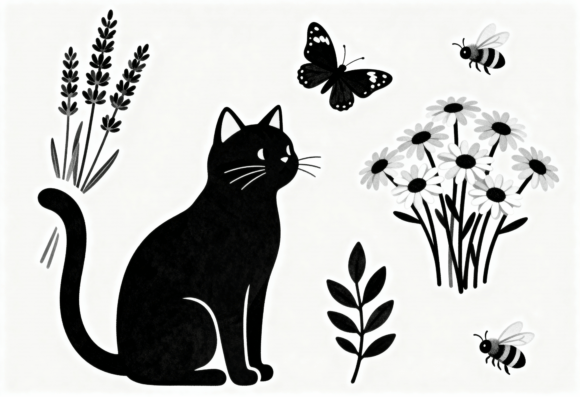
The mood this design creates is immediately cozy yet vibrant. It feels like a late afternoon in a garden where nature is buzzing with life. The juxtaposition of the sleek black cat against the soft lavender daisy suggests a playful contrast that works well for modern, boutique-style branding. For an embroidery designer, the layout is inviting; it doesn't scream for attention so much as it invites the viewer to lean in and appreciate the small details. It feels less like a generic clip art and more like a curated illustration ready to be stitched.
From Digital File to Finished Product: A Real-World Scenario
Let's imagine a practical scenario. I am preparing a custom order for a local boutique owner who specializes in handmade gifts for new parents. She needs a unique design for a baby onesie or perhaps a set of organic cotton burp cloths. She asked me if Black Cat Lavender Daisy Bee Butterfly would work for her line. My gut instinct says yes, but only if we approach the execution with care.
In this context, the design transforms into a personalized gift that tells a story. The black cat adds a touch of modern coolness often found in millennial and Gen Z aesthetics, while the lavender daisy, bee, and butterfly soften the look with natural elements. If I were to stitch this onto a light-colored muslin bag or a white sweatshirt, the contrast would be striking. However, the true test lies in the stitching clarity. Would the tiny legs of the bee hold up after washing? Would the curve of the cat's back look smooth on a curved surface like a cap?
I envision this design being used on a tote bag design for a craft fair. The narrative of the artwork fits perfectly with the "maker" community. Customers browsing an Etsy seller's shop would likely stop and engage with a product that features such a lively composition. It elevates the perceived value of the item, turning a simple canvas tote into a statement piece. The design acts as a visual anchor, suggesting quality and thoughtfulness in the final product.
Performance on Various Fabrics and Garments
Not all fabrics treat a machine embroidery design equally. When evaluating Black Cat Lavender Daisy Bee Butterfly for different projects, we must consider the texture and stability of the material. On stable, medium-weight fabrics like denim or twill, this design would shine. The satin stitch areas, particularly around the cat's outline and the petals of the daisy, would create a glossy, professional finish that catches the light beautifully.
For sweatshirt embroidery, the density of the fill stitches needs to be balanced. If the design includes too many tight fills, it could make the fabric feel stiff and uncomfortable. However, if the artist uses a mix of fill stitch and running stitch effectively, the result would be soft and wearable. I can easily see this working on a hoodie pocket or a chest logo for a small business merchandise line.
Baby clothes present a different challenge. The delicate nature of infant skin means we need to avoid heavy stabilizers or overly dense stitching. Here, the Black Cat Lavender Daisy Bee Butterfly design offers a great opportunity to use lighter threads and a softer touch. It would make a stunning addition to a nursery decor pillow cover or a blanket border. The whimsical theme resonates deeply with parents looking for something unique beyond standard stars and moons.
Critical Considerations and Potential Pitfalls
While the design is charming, there are specific areas where caution is required. One of the most common mistakes designers make is underestimating the complexity of small details when scaling down. If you attempt to stitch this on a very small hoop size, the bee and butterfly wings might become indistinguishable blobs of thread. The intricate lines of the cat's whiskers could also get lost if the resolution isn't high enough.
Textured fabrics pose another hurdle. If you try to embroider this on a chunky knit sweater or a rough burlap, the needle might struggle to penetrate, leading to skipped stitches or puckering. Similarly, thin or stretchy fabrics require a robust stabilizer to prevent distortion. Without proper backing, the tension of the satin stitch could pull the fabric out of shape, ruining the symmetry of the flower and the animal.
Dense stitch areas are also a concern. If the design relies heavily on fill stitches without adequate spacing, the resulting texture can be thick and rigid. This is particularly problematic for items that need frequent washing, like kitchen towels or aprons. Over time, heavy stitching can cause the fabric to wear out faster at the stress points. Additionally, on dark fabrics, the visibility of the design will depend entirely on the choice of thread colors. A black cat on a navy shirt might disappear, requiring a careful selection of bright or contrasting threads to ensure the silhouette pops.
Design Notes for the Professional Embroiderer
Before committing this embroidery file to a production run, I strongly advise testing the design on scrap fabric first. This step is non-negotiable for any serious crafter or Etsy seller. You need to verify the hoop size requirements and ensure that the machine can handle the specific stitch types involved. Check the thread color contrast by creating a mockup; sometimes a design looks perfect on a computer screen but falls flat in reality due to lighting and thread sheen.
Review the stitch density carefully. If the design feels too crowded, consider simplifying certain elements or adjusting the digitizing settings to improve flow. Confirm whether the design works for both personal and commercial projects by checking the licensing terms provided with the download. Many digital embroidery files have restrictions on selling finished goods, so clarity here is vital for your craft business.
Inspect small details closely. Are the curves smooth? Do the corners of the daisy petals look sharp? If you are using this for an embroidered patch, ensure that the edges are clean enough to be cut out without fraying. Test the design in black and white mockups to see how the shapes interact without the distraction of color. This helps in understanding the fundamental structure of the artwork.
Finally, compare light and dark fabric backgrounds to determine the best presentation for your target audience. The versatility of Black Cat Lavender Daisy Bee Butterfly allows it to fit into various niches, from holiday embroidery to boutique branding. By paying attention to these practical details, you ensure that the final product reflects the same creativity and professionalism that the digital asset promises.
In conclusion, this design is a strong contender for anyone looking to add a touch of whimsy to their handmade product line. It balances artistic flair with functional potential, provided the technical aspects of embroidery are respected. Whether you are creating a one-off gift or a bulk order for a shop, taking the time to understand the nuances of the design will pay off in customer satisfaction and brand consistency.